
- Buy Crypto
- Markets
 Futures
- Spot
- Copy Trade
- Earn
- More
Report: The use of cryptocurrency to evade sanctions surged by 700% in 2025

According to CoinDesk, Chainalysis' latest report shows that in 2025, cryptocurrency-related illegal activities linked to sanctions surged, with sanctioned entities receiving at least $104 billion in cryptocurrency, a 700% increase from 2024, driving the total illegal on-chain transaction volume for the year to $154 billion.
Countries like Russia, Iran, and North Korea, which are under U.S. and European sanctions, are integrating cryptocurrency into their national financial strategies to circumvent the traditional banking system. The report specifically notes that the ruble-pegged stablecoin A7A5 is a primary channel for sanctioned Russian enterprises, processing $93.3 billion in transactions in less than a year, serving as a settlement avenue for cross-border trade by sanctioned Russian companies.
This token is associated with the exchanges Grinex and Meer, having processed billions of dollars in transactions before being sanctioned by the U.S. and Europe. A7A5 also offers "instant exchange" services, allowing tokens to be converted into mainstream U.S. dollar stablecoins with minimal KYC checks, having processed over $2.2 billion in transactions to date, effectively enabling sanctioned entities to enter the broader crypto economy.
Addresses linked to the Islamic Revolutionary Guard Corps of Iran account for over 50% of the value received by Iranian services, transferring over $3 billion in funds. North Korea remains the largest actor in cyber theft, stealing over $2 billion in cryptocurrency in 2025. Stablecoins currently account for about 84% of illegal transaction volume.
You may also like

The migration of settlement rights: B18 and the institutional starting point of on-chain banks

From Tencent and Circle: Looking at the Simple and Difficult Questions of Investment

The second half of stablecoins no longer belongs to the crypto circle

Cursor "Shell" Kimi Controversy Reversed: From Copyright Infringement Allegations to Authorized Collaboration, China's Open Source Model Once Again Becomes a Global AI Foundation

The Real Reason Tokens Don't Sell: 90% of Crypto Projects Overlook Investor Relations

Is the income of pump.fun real, earning a million dollars a day despite the market downturn?

The real reason why tokens are not selling: 90% of crypto projects neglect investor relations

Who is the true winner of the "Tokenization" narrative?

Moss: The Era of AI-Traded by Anyone | Project Introduction

Chip Smuggling Case Exposes Regulatory Loophole | Rewire News Evening Update

How a Structured AI Crypto Trading Bot Won at the WEEX Hackathon
Ritmex demonstrates how disciplined risk control and structured signals can make an AI crypto trading bot more stable and reliable on WEEX, highlighting the importance of combining execution discipline with scalable AI trading systems.

Old Indicator Fails, Three Major New Signals Emerge: BTC True Bottom May Still Be Below $60K

Meeting OpenClaw Founder at a Hackathon: What Else Can Lobsters Do?
Huang Renxun's Latest Podcast Transcript: NVIDIA's Future, Embodied Intelligence and Agent Development, Soaring Demand for Inferencing, and AI's PR Crisis
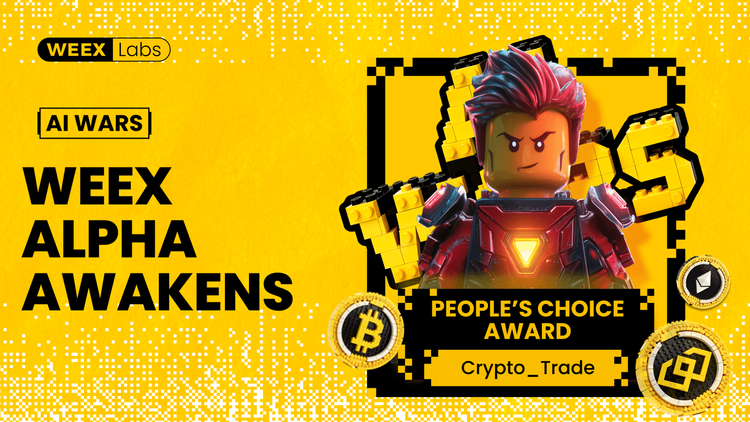
How a Structured AI Crypto Trading Bot Won at the WEEX Hackathon
Crypto_Trade shows how structured inputs and controlled adaptability can build a more stable and reliable AI crypto trading bot within the WEEX AI Trading Hackathon, highlighting a practical path toward scalable AI trading systems.

AI Starts to Devour the Manufacturing Industry | Rewire News Morning Edition
When Scaling Meets Speed, Ethereum Foundation Introduces "Hardness" to Safeguard the Base Layer


 App
App