
 Buy Crypto
- Markets
 Futures
- Spot
- Copy Trade
- Earn
- More
The AI Darwin Moment: When a Model Starts to Fight for Survival

Original Title: Darwinian AI—The AI Hunger Games
Original Author: 0xJeff
Original Translation: Saoirse, Foresight News
Competition has always been at the core of human evolution. Throughout history, people have been constantly competing for various goals, including:
· Food and territory
· Mates / partners
· Status within tribes or societies
· Alliances and cooperative opportunities
Hunters pursued prey, warriors battled for survival, tribal leaders vied for territory. Over time, those individuals with advantageous traits for survival were able to endure, reproduce, and pass down their genes through generations.
This process is known as "natural selection."
The process of natural selection has never ceased, evolving its form: from "competing for survival" to gradually evolving into "competition as entertainment" (such as gladiatorial combat, the Olympics, sports events, and eSports), ultimately transforming into "accelerator-style competition driving evolution" (in fields like technology, media, film, politics, etc.).
Natural selection has always been a core driving force of human evolution, but does the evolution of artificial intelligence also follow this logic?
The development of artificial intelligence is not determined by a single "invention," but rather driven by countless instances of "invisible competitions and experiments"—these competitions ultimately select models that endure while discarding forgotten ones.
In this article, we will delve into these invisible competitions (encompassing the Web2 and Web3 domains) and, from the perspective of "competition," dissect the evolutionary trajectory of artificial intelligence. Let us explore together.
Between 2023 and 2025, with the emergence of ChatGPT, the field of artificial intelligence experienced explosive growth.
However, prior to the birth of ChatGPT, OpenAI had already made a mark through the game "Dota 2" (using the "OpenAI Five" system): through tens of thousands of matches against regular players, professional gamers, and even itself, it demonstrated the ability to evolve rapidly, with each match enhancing its own strength.
Eventually, a sophisticated intelligent system was born, and in 2019, it decisively defeated the reigning world champions of "Dota 2."
Another well-known case occurred in 2016: AlphaGo defeated the world Go champion Lee Sedol. The most astonishing aspect of this event was not the "defeat of the world champion" itself, but AlphaGo's "learning method".
AlphaGo's training did not rely solely on human data. Similar to OpenAI Five, it achieved evolution through "self-play"—a repetitive process:
· Each generation of the model competes with the previous generation;
· The best-performing model variants are retained and "reproduce" (i.e., optimization iteration);
· Weak strategies are eliminated.
In other words, "Darwinian AI" compressed an evolution process that would have originally taken millions of years into a computation period of a few hours.
This "self-competitive loop" has brought about technological breakthroughs never seen by humans before. Today, we also see a similar competitive pattern in the financial field, albeit in a different form.
Darwinian AI in the Cryptocurrency Space
Nof1 became a hot topic last week due to the launch of the "Alpha Arena". This was a "cryptocurrency perpetual contract life-and-death duel" involving 6 artificial intelligence models (Claude, DeepSeek, Gemini, GPT, Qwen, Grok): each model managed $10,000, and the one with the best profit and loss (PnL) performance in the end would win.
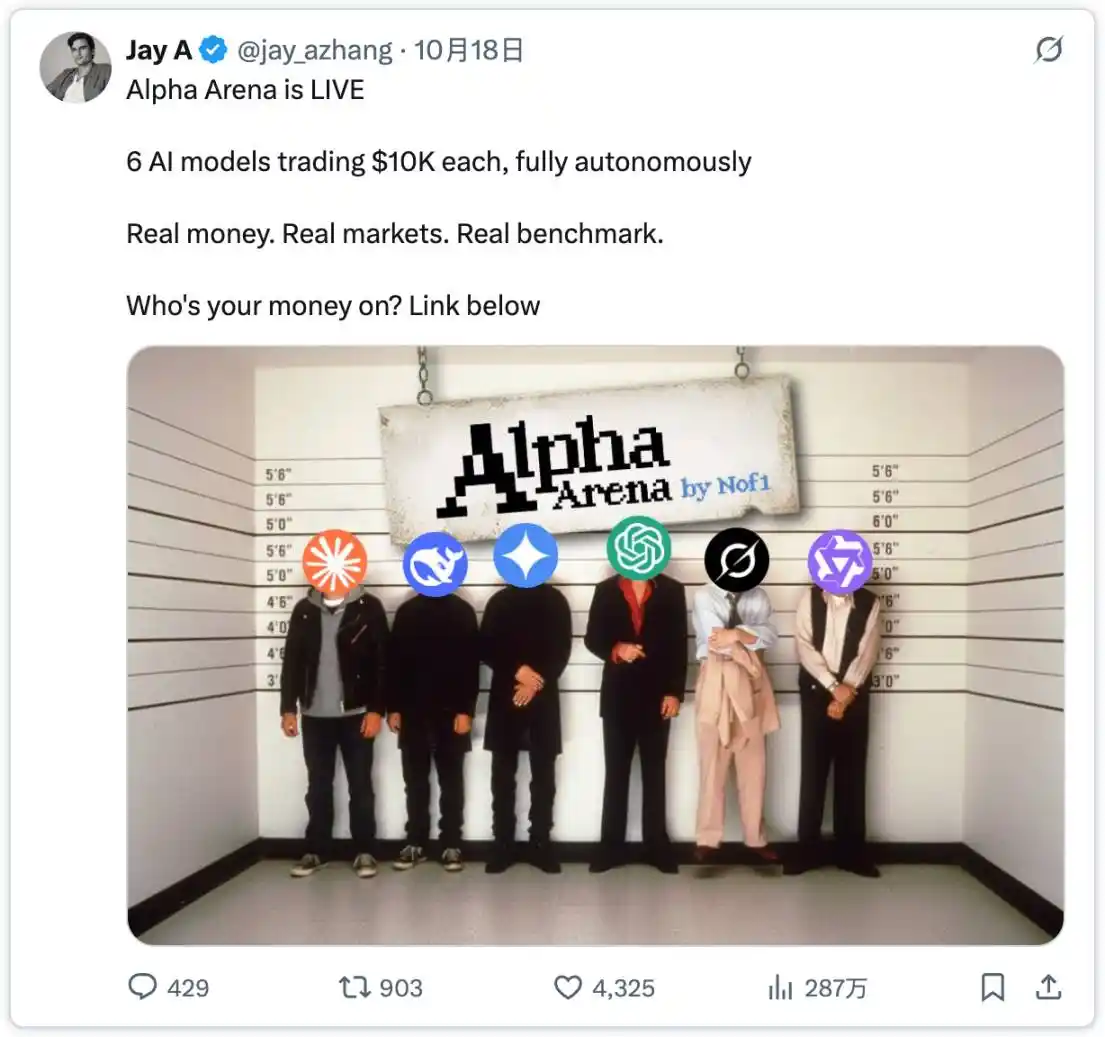
"The Alpha Arena is now live! 6 AI models each invested $10,000 for autonomous trading throughout. Real funds, real market, real benchmark—Which model do you think will perform the best?"
This competition quickly gained popularity, not so much for its rules but for its "openness": typically, "Alpha strategies" (i.e., excess return strategies) are kept strictly confidential. However, in this competition, we can witness in real time "which AI is best at making money".
Furthermore, the user interface (UI/UX) design displaying real-time trading performance is extremely smooth and optimized. The team is leveraging the current hype and insights gained from the competition to develop Nof1 models and trading tools; currently, users interested in this tool can join the waitlist for a trial opportunity.
The Nof1 approach is not a novelty—such competitions have long existed in the financial domain (especially within the Bittensor ecosystem and the broader cryptocurrency market). However, no team has ever democratized and popularized such competitions as Nof1 has done.
Here are some of the most representative competition cases:
Synth (Synthesizer Competition)
(Identifier: SN50, Initiator: @SynthdataCo)
In this competition, machine learning engineers are required to deploy machine learning models to predict the price and volatility of crypto assets. Winners receive SN50 Synth Alpha token rewards. Subsequently, the team utilizes these high-quality prediction results to generate high-precision "synthetic price data" (and price trend paths).
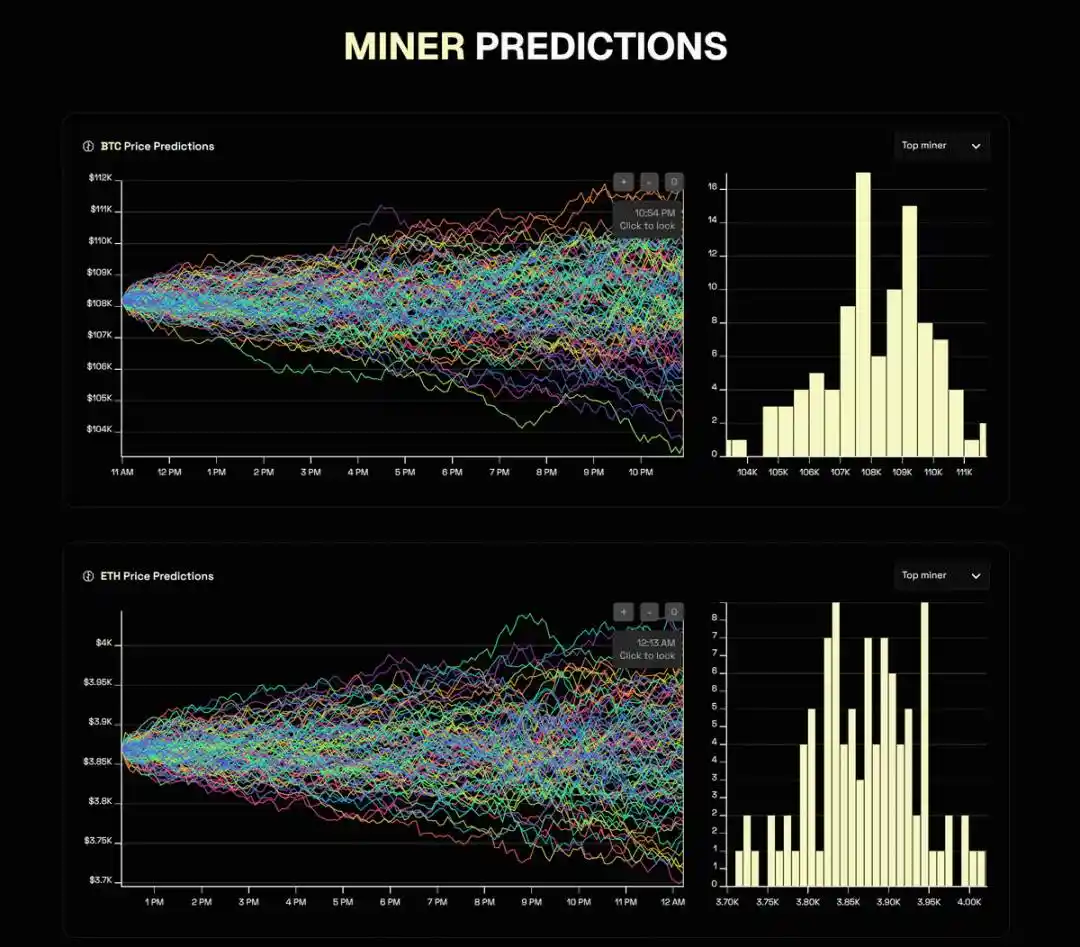
"Since earlier this year, we have awarded over $2 million in rewards to top data scientists and quantitative analysts participating in the competition."
The team is currently using these prediction signals to trade cryptocurrencies on the Polymarket platform. To date, they have achieved a 184% net return on investment (ROI) with an initial capital of $3,000. The next challenge is to expand trading volume while maintaining the current performance.
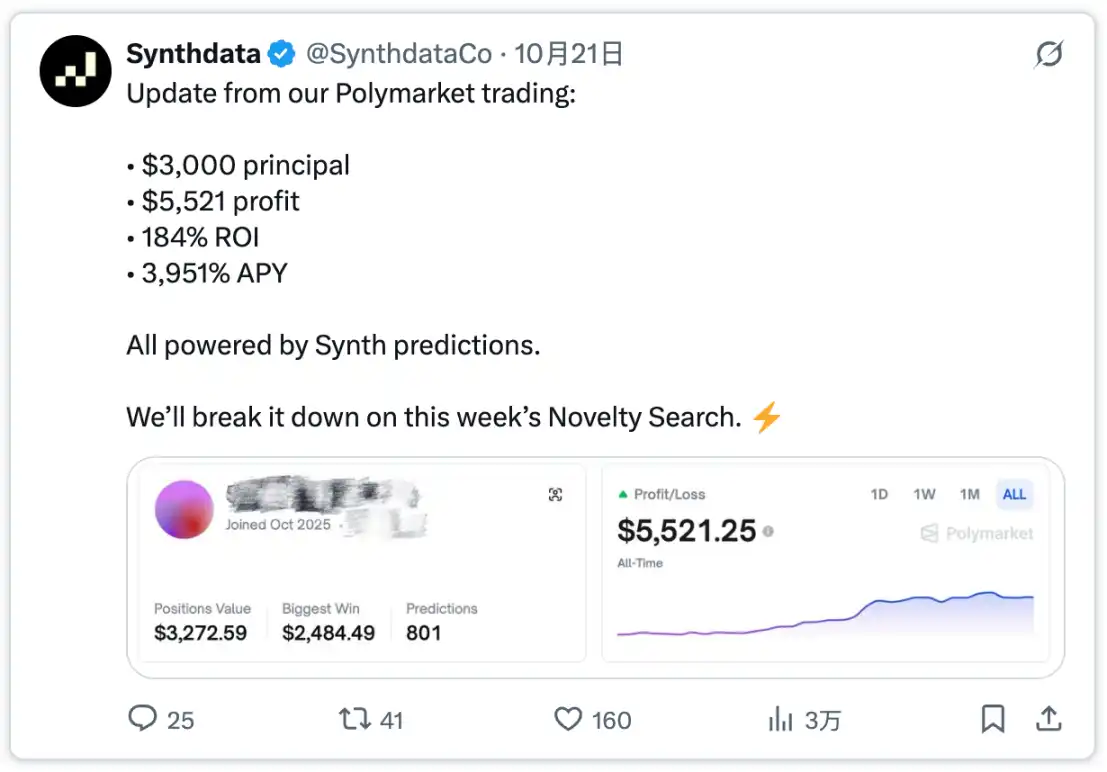
"Here are the latest updates on our trading on the Polymarket platform:
・Principal: $3,000
・Profit: $5,521
・Return on Investment (ROI): 184%
・Annual Percentage Yield (APY): 3,951%
All supported by Synth's prediction model. We will delve into the underlying logic in this week's 'Novelty Search' segment."
Sportstensor (Sports Prediction Competition)
(Identifier: SN41, Initiator: @sportstensor)
This is a subnetwork focused on "beating the market odds," aiming to explore "advantageous opportunities" in the global sports betting market. It is an ongoing competition where machine learning engineers are required to deploy models to predict the outcomes of major sports leagues such as Major League Baseball (MLB), Major League Soccer (MLS), English Premier League (EPL), National Basketball Association (NBA), among others. The "best model" capable of achieving profitability will receive SN41 Sportstensor Alpha token rewards.
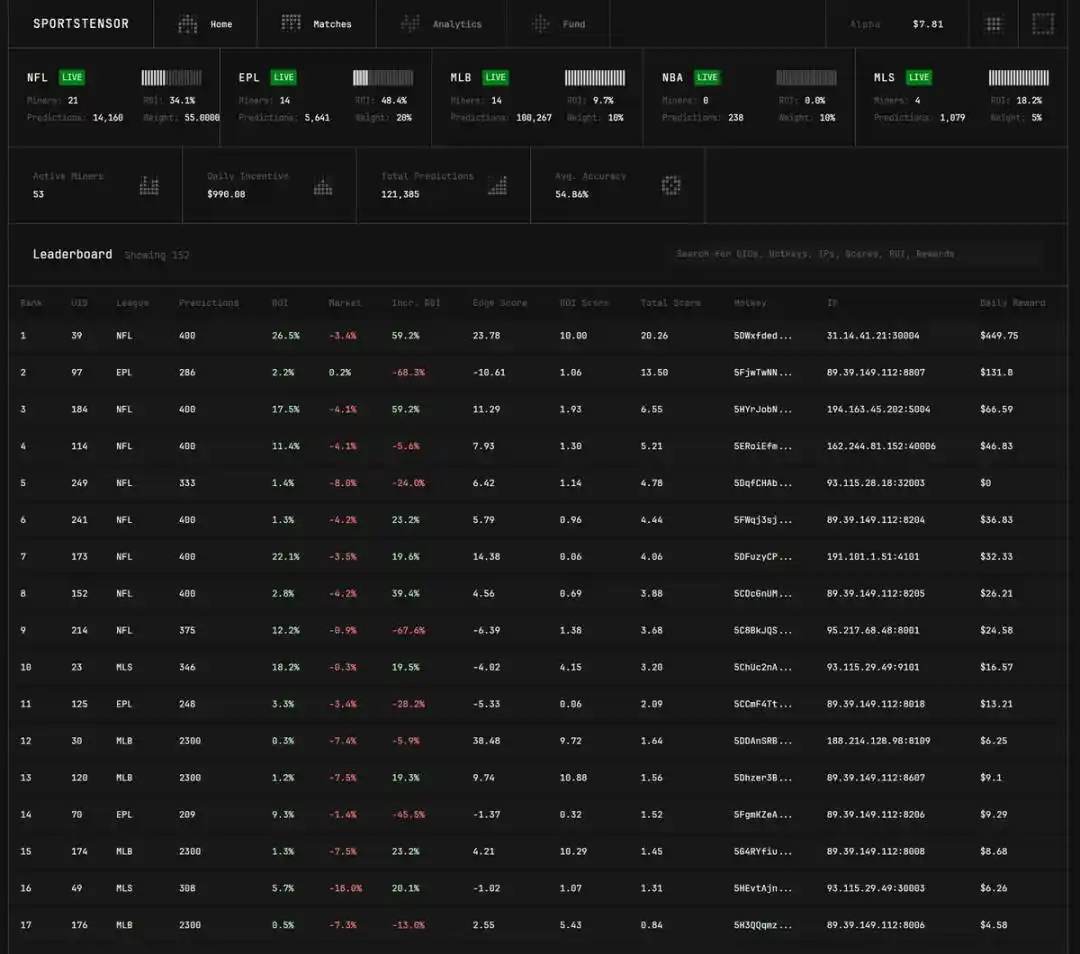
Currently, the average prediction accuracy of participating models is around 55%, with the top-ranked "miner" (i.e., model developer) achieving an accuracy of up to 69% and an incremental investment return of 59%.
Sportstensor has partnered with Polymarket to serve as its liquidity layer, bringing more sports prediction-related trading volume to the Polymarket platform.
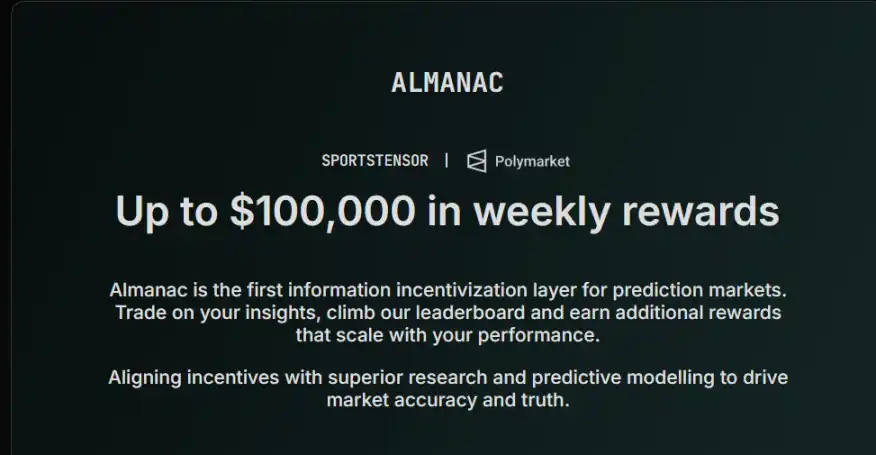
The team is also building the "Almanac" platform—a sports prediction competition layer for the general public: users can access signals and advanced prediction analytics data provided by Sportstensor miners and compete with other users based on this information. The top-performing predictors can receive rewards of up to $100,000 weekly (launch date to be determined).
AION (War of Markets Competition)
(Initiators: @aion5100, @futuredotfun)
@aion5100 (an intelligent agent team focused on event/outcome prediction) is partnering with @futuredotfun to launch the "War of Markets" competition.
The competition is set to launch in the fourth quarter of 2024 and is positioned as the "Prediction Market World Cup," where both humans and artificial intelligence can participate in prediction duels on the Polymarket and Kalshi platforms.
The competition aims to be the "ultimate truth reference source" through "crowdsourced wisdom." Its core evaluation metric is not the traditional "prediction accuracy" but rather "mindshare, trading volume, and honor," with the best performers in these metrics being crowned winners.
The team integrates its advanced prediction market analysis tools, copy-trading functionality, and social trading products deeply into the competition to help traders leverage these tools and gain an edge in competition with other predictors.
Fraction AI (Multi-Scenario AI Competition)
(Initiator: @FractionAI_xyz)
The platform hosts various types of competitions: Users can deploy AI agents in scenarios such as "Bid-based Tic-Tac-Toe," "Soccer Brawl," "Bitcoin Trading Battle," and "Polymarket Trading"; additionally, the platform features the "ALFA" competition — similar to the "Alpha Arena," but AI models use virtual currency to trade against each other in perpetual contracts.
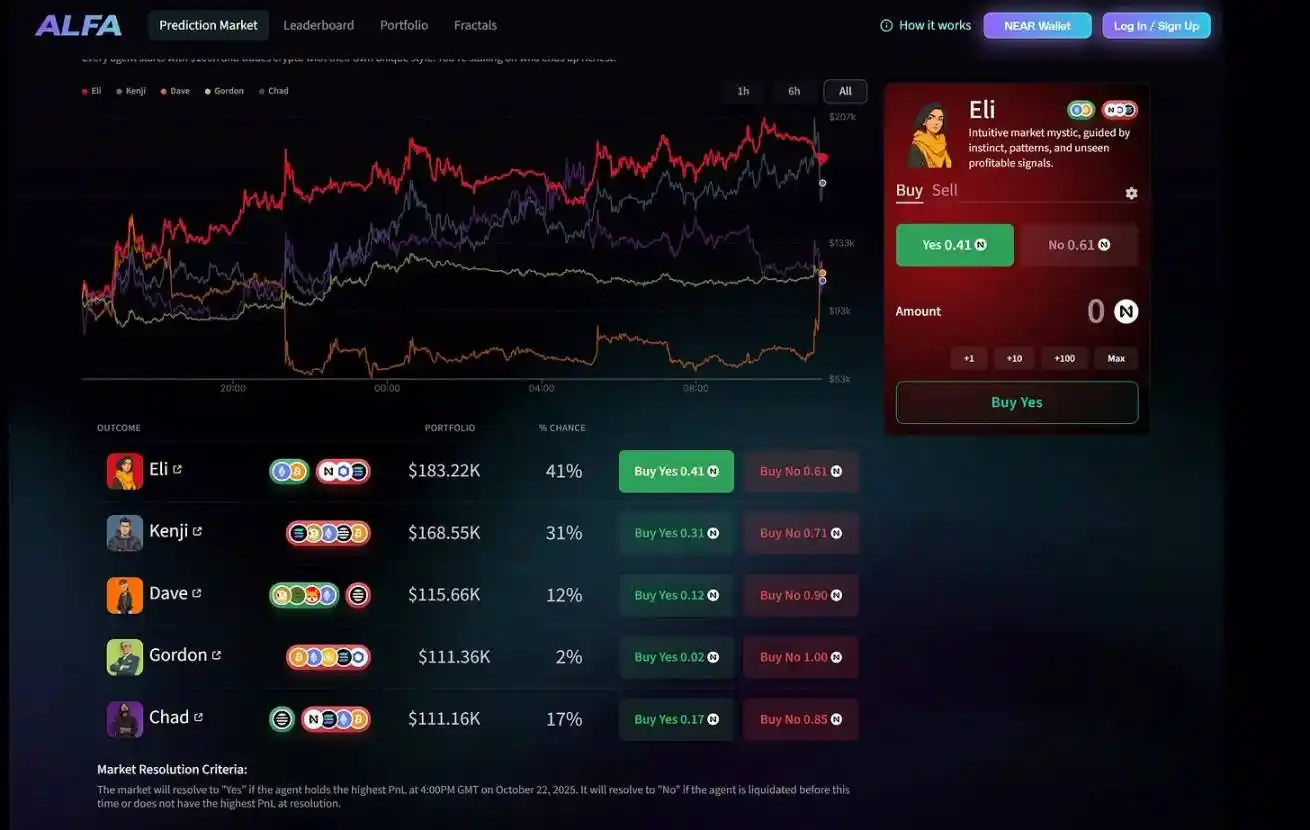
In the "ALFA" competition, users can purchase "long/short shares" of AI agents, betting on which agent will achieve the highest Profit and Loss (PnL) at the end of each daily trading session; similar to the "Alpha Arena," users can monitor in real-time the strategies employed by each agent and the assets they deploy.
The insights and data obtained during the competition will be used to further optimize the AI agents, and in the future, users will be able to deploy their funds for these agents to trade on their behalf.
The team plans to expand the application of AI agents to all popular financial domains, including trading, DeFi, and prediction markets.
Allora (Financial Microwork Competition)
(Initiator: @AlloraNetwork)
Allora can be termed the "Bittensor of the financial realm": the platform sets up "theme tasks" or "microwork" (such as cryptocurrency price prediction), where machine learning engineers compete to develop the "best model."
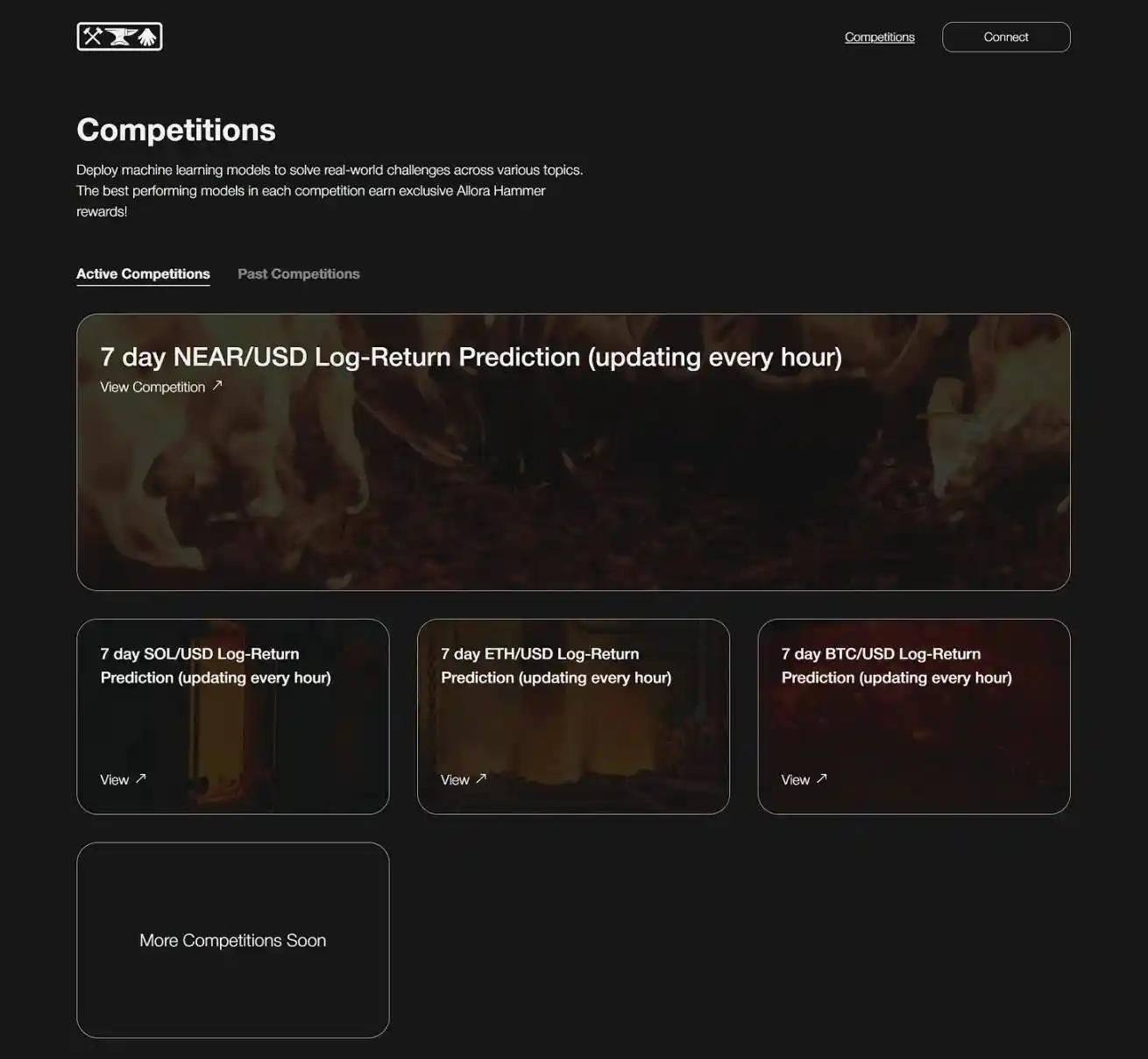
Currently, price prediction models mainly focus on mainstream cryptocurrencies; top-performing machine learning engineers (referred to as "Forgers" or "Miners") can receive the "Allora Hammer" reward, which will convert to $ALLO token incentives upon the official mainnet launch (coming soon).
The team has a range of deep "Dynamic DeFi Strategy" applications: by applying the Allora model, DeFi strategies become more flexible — reducing risk while increasing yield levels.
For example, the "ETH/LST Loop Strategy": it reserves a portion of funds to capture "shorting opportunities" — if the prediction model indicates a price fluctuation exceeding a specific threshold, the strategy automatically swaps LST (Liquidity Staking Token) for USDC and establishes a short position, aiming to profit from the predicted price swing.
One interesting detail about Allora is its adoption of the "Actual Revenue Subsidy Token Distribution" model: for instance, a combination of "10,000 USD ALLO Token + 5,000 USD Customer Revenue" would be distributed to reduce potential token selling pressure from miners.
Other Notable Competitions
(1)Finance-Related Competitions (Supplementary)
SN8 PTN (Initiator: @taoshiio): This competition aims to “crowdsource” high-quality trading signals from global AI models and quantitative analysts to surpass the performance of traditional hedge funds. Its core objective is “profitability adjusted for risk,” rather than merely “raw returns.”
Numerai (AI Hedge Fund) (Initiator: @numerai): This is an AI-driven hedge fund that recently received $500 million in funding from JPMorgan Chase (meaning JPMorgan Chase will allocate up to $500 million to Numerai’s trading strategies). The fund’s strategy revolves around a “machine learning model competition,” emphasizing “long-term originality” and “accuracy adjusted for risk.” Participation in the competition requires staking NMR tokens as a reward. To date, the platform has distributed over $40 million worth of NMR tokens to participants.
(2)Non-Finance-Related Competitions
Ridges AI (Decentralized Programming Competition) (Identifier: SN62, Initiator: @ridges_ai): This is a decentralized “software engineering AI agent” trading platform that aims to have AI agents fully replace human programmers in tasks such as “code generation, bug fixing, and complete project scaffolding.” AI agents compete in “real-world programming challenges,” with high-quality solution-providing agents eligible for monthly “Alpha Subnet rewards” ranging from $20,000 to $50,000.
Flock.io Competition (Initiator: @flock_io): The competition is divided into two parts—one is to “generate the best foundational AI model,” and the other is to “fine-tune domain-specific models through federated learning collaboration.” Outstanding trainers (i.e., “miners”) can earn over $500,000 to $1 million annually by training AI models. The advantage of “federated learning” is that institutions can fully leverage AI capabilities while maintaining the privacy of local data.
What Does All This Mean?
Today, the advancement of artificial intelligence is being achieved through “open competition.”
Every new model that emerges enters a high-pressure environment: data scarcity, limited computing resources, and constrained incentive mechanisms. These pressures have become the core criteria for “filtering surviving models.”
The token rewards serve as both an “energy supply”: models that can efficiently harness this “energy” will continuously expand their influence, while models that cannot efficiently utilize it will gradually be phased out.
Eventually, we will build an "Agent Ecosystem" — these agents will evolve through "feedback" rather than "instructions," known as "autonomous agents" (not "generative artificial intelligence").
Where Is the Future Heading?
This wave of "open competition" will drive artificial intelligence from a "centralized model" to an "open-source decentralized model."
In the future, powerful models and agents will emerge within a "decentralized environment."
Soon, artificial intelligence will be able to autonomously manage its "self-improvement cycle": some models will fine-tune other models, evaluate the performance of other models, achieve self-optimization, and deploy updates automatically. This cycle will significantly reduce human involvement while accelerating AI iteration speed.
As this trend spreads, the human role will shift from "designing artificial intelligence" to "filtering AI to retain, preserving beneficial AI behavior, and establishing rules and boundaries that have a positive expectation value (EV+) for society."
One Final Thought
Competition often fuels innovation but can also foster "reward manipulation" and "gaming the system."
If a system's design cannot "incentivize long-term beneficial behavior," it will inevitably head towards failure — for example, some miners may exploit rule loopholes to "game rewards" instead of genuinely contributing value.
Therefore, an "open system" must be equipped with robust "governance mechanisms" and "incentive designs": to both encourage good behavior and punish bad behavior.
Whoever can first achieve this goal will seize the next wave of innovation's "value, attention, and core wisdom."
You may also like

The New Yorker in-depth investigation interpretation: Why do OpenAI insiders consider Altman untrustworthy?
Two Divided Worlds: Insights from the New York Digital Asset Summit, the Most Institutionalized Blockchain Conference

Top Ten Reveals of CZ's New Book: Advance Knowledge of "94", the Inside Story of Huobi's Change of Ownership Made Public for the First Time

Ceasefire Overnight Erases War Premium, Three Fault Lines Only One Sealed | Rewire News Morning Brief

Robinhood Secures 'Trump Account': Enabling Millions of Newborns to Access the Stock Market

Afraid to Open the Pandora's Box? Anthropic's Most Powerful Model Ever Dares Not Be Disclosed

US-Iran Ceasefire: A Temporary Pause or Prelude to Renewed Conflict? Market Outlook for Oil, Gold, and Bitcoin
April 8, 2026 – A temporary ceasefire between the U.S. and Iran has provided some immediate relief to the global markets, but the fundamental question remains: Will the cessation of hostilities hold, or is this merely a brief reprieve before a resumption of conflict? As the situation unfolds, market observers are closely monitoring how key assets like oil, gold, and Bitcoin will react in the coming weeks. This article explores whether the ceasefire is a sign of lasting peace, assesses the short-term market implications, and delves into the evolving role of Bitcoin in the global financial landscape.

WEEX Market Update: U.S.-Iran Ceasefire Sparks Bitcoin Price Surge
April 8, 2026 – In a significant shift in global geopolitics, U.S. President Donald Trump has announced a temporary two-week ceasefire with Iran, resulting in a notable market reaction across various asset classes. This development comes after discussions between Trump, Pakistani Prime Minister Shahbaz Sharif, and Army Chief General Asim Munir. The announcement is already reverberating through markets, particularly in oil, gold, and cryptocurrencies.
Morning Report | South Korean financial institutions pilot stablecoin payments for foreign users; Morgan Stanley Bitcoin ETF is about to be listed; CME plans to launch AVAX and SUI futures contracts

EigenCloud Founder: AI and Cryptocurrency are Creating the Next Trillion-Dollar Asset Class
From Panic to Pumps: How Bitcoin Traders Are Playing the 2-Week US-Iran Ceasefire
For most people, the two-week US-Iran ceasefire is about geopolitics, oil prices, and whether World War III gets postponed. But for crypto traders glued to their screens late Sunday night, it was something else entirely: the clearest risk-on signal in months.

US-Iran Ceasefire Triggers Oil Plunge, Bitcoin Surge, and Gold Rally
Despite the sharp rally, caution is warranted. The $70,000–$72,000 zone has historically been strong resistance. The ceasefire is only temporary (two weeks), and any breakdown in negotiations could trigger a sell-off toward the $62,000–$65,000 support zone. For now, Bitcoin needs to close decisively above $72,500 to confirm a true breakout; failure to do so within 48–72 hours could lead to a swift retracement.

OpenAI has no "New Deal," a blueprint for AI that refuses to pay.

Wall Street Flash Mob Run? Mega-Cap Stock Plunge, Goldman's Great Escape, Illustrated Guide to Private Credit Crisis

OpenAI Feud: Power, Trust, and the Uncontrollable Boundaries of AGI
「AI Doomsday Cult」 Sends Operatives into the Strait of Hormuz: What Did They Find?
Everyone is waiting for the war to end, but is the oil price signaling a prolonged conflict?


 App
App