
Selling 69,000 Bitcoins? How Will the Silk Road’s Bitcoin Sale Impact the Market?


Just ten days after the U.S. government once again committed to providing $6 billion in military aid to Ukraine, the U.S. Department of Justice is preparing to initiate the liquidation of a substantial Bitcoin asset.
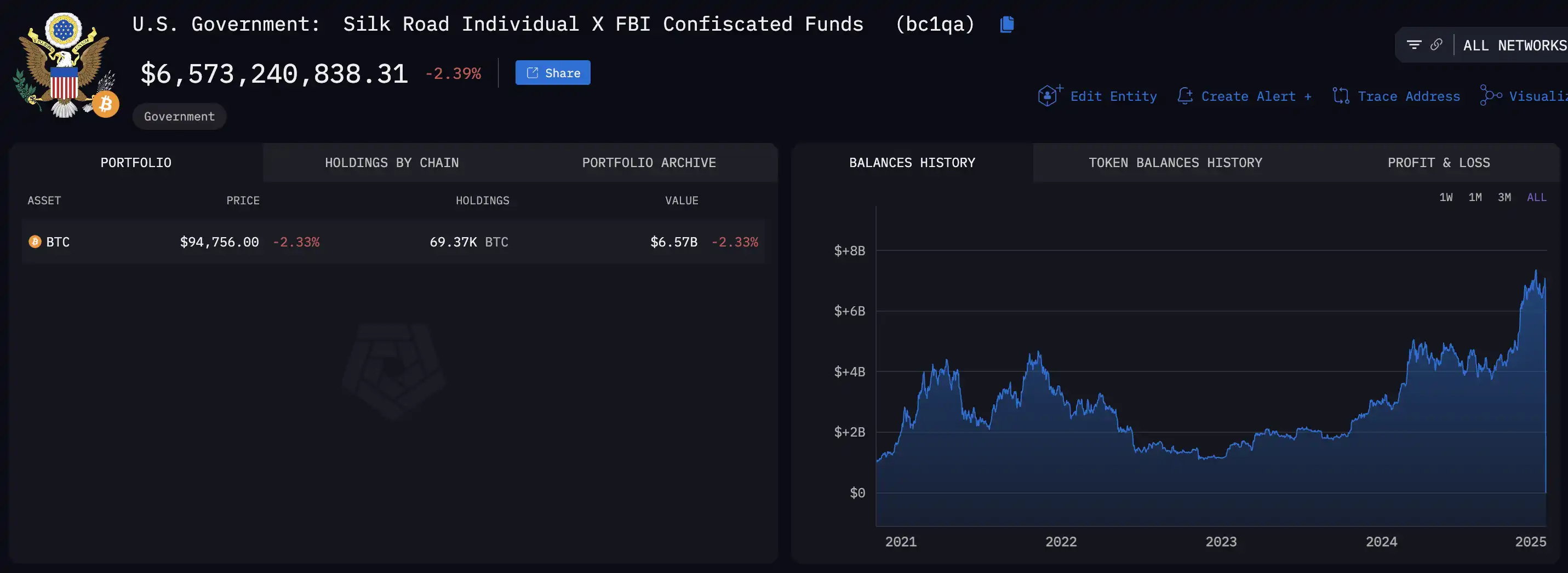
On January 9, an official confirmed to DB News that the Department of Justice has been authorized to dispose of 69,370 Bitcoins seized in relation to the infamous Silk Road case. The current market value of this asset is approximately $6.5 billion.
It is reported that the Department of Justice has requested permission to sell these assets citing Bitcoin price volatility. When asked about the next steps, a Department of Justice spokesperson stated, "The government will take the next steps based on the judgment in this case."
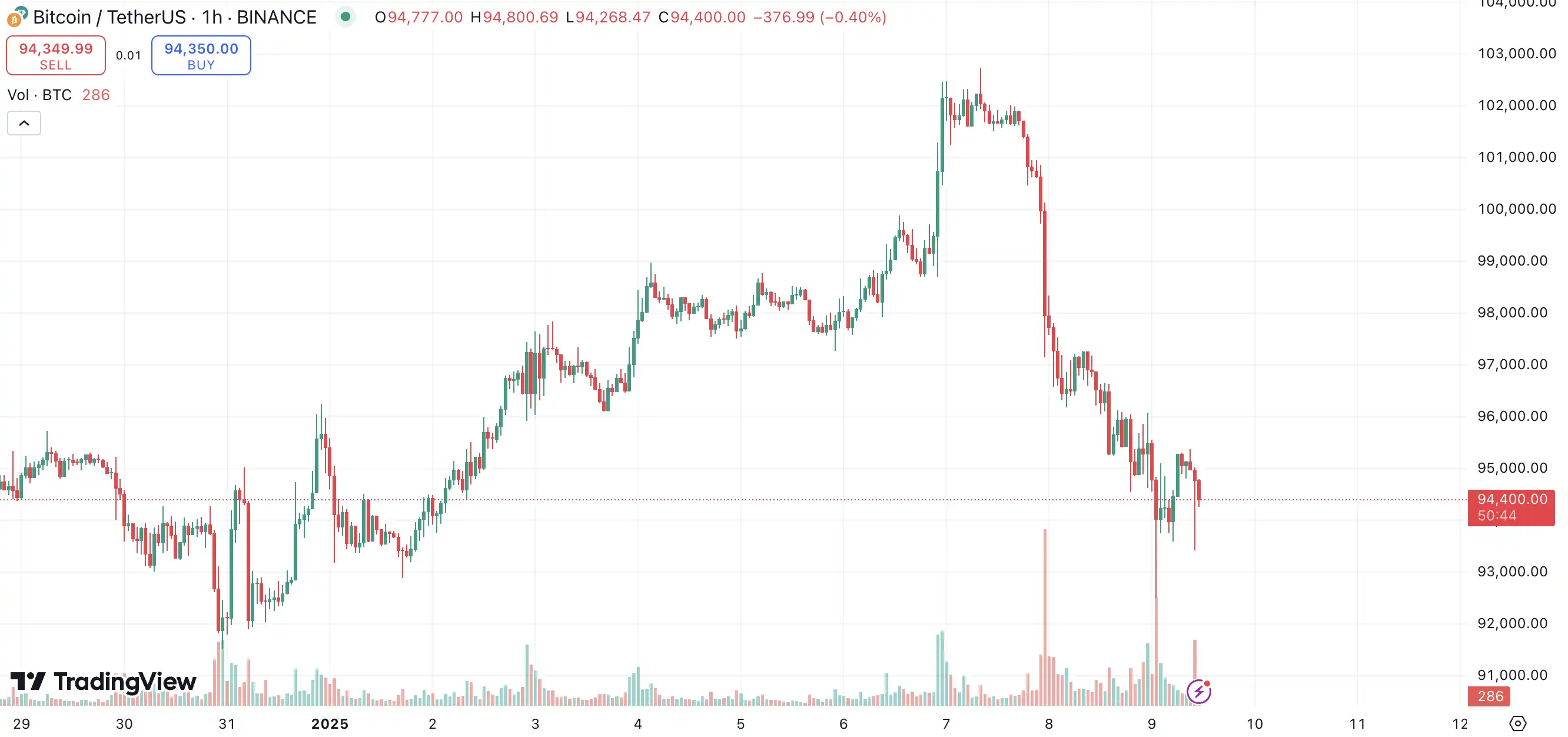
Following the news, Bitcoin plunged over 2.5% in 24 hours, with the price standing at $94,400 at the time of writing.
One of Bitcoin's historically influential development milestones: Silk Road
In October 2013, a young man named Ross Ulbricht was arrested in a San Francisco library, known by his alias "Dread Pirate Roberts" (DPR), signaling the end of the once-thriving drug and weapon trading website known as the "Silk Road." In 2015, Ross Ulbricht was sentenced to life in prison.

This darknet born in 2011 initially operated as an "eBay-like model" offering various illicit goods and services, such as drugs, fake IDs, hacking tools, etc. Due to the anonymity of the dark web and Bitcoin as the primary payment method, the Silk Road quickly grew and became one of the most famous and largest illegal markets on the dark web.
From 2012 to 2013, U.S. law enforcement agencies such as the FBI and the DEA began closely monitoring the Silk Road, deploying undercover agents. Due to the platform's frequent transactions, large scale, and involvement in illegal activities across multiple countries, U.S. law enforcement agencies identified it as a key target for crackdown.
During the FBI's investigation of the Silk Road case, approximately 170,000 Bitcoins were seized from various locations such as the platform's servers and Ross Ulbricht's personal digital wallets, marking one of the largest Bitcoin enforcement seizures in history at that time.
When arresting Ross Ulbricht, law enforcement gained access to relevant encrypted wallets through the seized laptop and server information on-site. Since Bitcoin transactions require private keys for transfer, once law enforcement has valid private keys, they can move the corresponding Bitcoin from the suspect's address to an official "custodial" wallet.
The U.S. Government Is Not Selling Bitcoin for the First Time
Since 2014, the U.S. government has held multiple auctions to sell the Bitcoin seized in the "Silk Road" case, and the timeline and impact on the market price are worth revisiting.
In June 2014, the U.S. government held its first public auction of the Bitcoin seized in the Silk Road investigation. The U.S. Marshals Service auctioned off about 30,000 bitcoins. Bidders included many institutional and individual investors, with prominent investor Tim Draper winning bids multiple times. In subsequent auctions, the government sold the remaining bitcoins in multiple batches.
After the auction, the price of Bitcoin remained stable around $600 and did not experience a "cascade" event. The active participation of institutional investors in the auction process reinforced Bitcoin's "legitimacy" attribute to some extent.
In December 2014, the second round of auctions involved 50,000 bitcoins, nearly double the scale of the first auction. Market expectations were similarly pessimistic. However, after the dust settled from the auction, Bitcoin continued to fluctuate in the $300 to $400 range without experiencing a continuous plunge.
In March 2015, another 50,000 bitcoins were auctioned off, by which time Bitcoin had already rebounded from its previous low. The prior market panic further subsided, and the price stabilized quickly in the $280 to $300 range after minor fluctuations.
In November 2015, the U.S. government's auctions of hundreds of thousands of bitcoins accumulated by the end of the year did not trigger significant market turmoil. On the contrary, due to continuous bidding by buyers, these auctions were interpreted as a symbol of Bitcoin gradually gaining more "legitimate investment" status.
Until today, the U.S. Department of Justice has been authorized to liquidate the remaining 69,370 BTC (valued at about $6.5 billion) seized in the Silk Road case, and the wallet address associated with the Silk Road, "bc1qa5," has remained dormant for over 4 years.
Based on past sales history, Bitcoin's price may experience temporary price panic, but in the long term, since the U.S. government has often conducted OTC auctions in the past, it may not sell at market price, and the negative impact on Bitcoin's price is unlikely to last long.
Trump's Pardon and Bitcoin Reserve Commitment May Postpone Sales?
In May 2024, during Trump's presidential election campaign, at the Libertarian National Convention held in Washington, D.C., he pledged that if re-elected as president, he would commute the sentence of Silk Road founder Ross Ulbricht on the first day. On July 28, at the Bitcoin 2024 conference, Trump stated that he once again pledged that after being elected president, he would commute the sentence of Silk Road founder Ross Ulbricht.
On November 14, Ross William Ulbricht made his first post on the X platform after the U.S. election, stating, "I sincerely thank all those who voted for President Trump. I believe he will fulfill his promise and give me a second chance. After more than 11 years in the dark, I finally see the dawn of freedom at the end of the tunnel. Thank you very much."
As of now, the prediction market on PolyMarket regarding "Will the U.S. government sell Bitcoin before Trump's inauguration?" has become a popular bet, with a trading volume of $136,310 and a 22% probability of selling Bitcoin before Trump's inauguration.
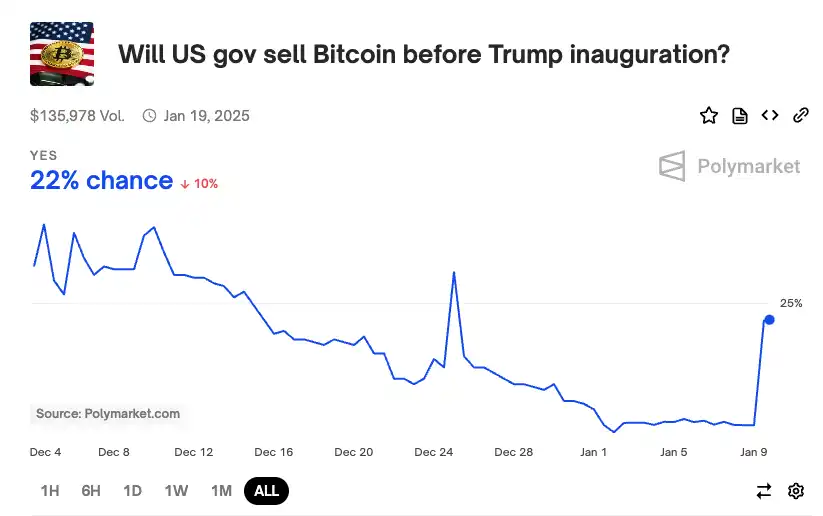
Given Trump's previous promise to commute the sentence of the 'Silk Road' founder Ross and his reiterated commitment to make the U.S. the world's cryptocurrency capital, embracing cryptocurrency.
Therefore, most people believe that Ross may be commuted or even pardoned. Likewise, in the PolyMarket topic "Who will President Trump pardon within 100 days of taking office?" the probability of Ross being pardoned is very high at 73% as of now.
Due to Trump's Bitcoin reserve commitment, if the U.S. government does not sell before Trump's official inauguration on January 20, there is speculation in the market that the seized Bitcoin from the Silk Road case may not be sold.
How Much Bitcoin Does the U.S. Government Own?
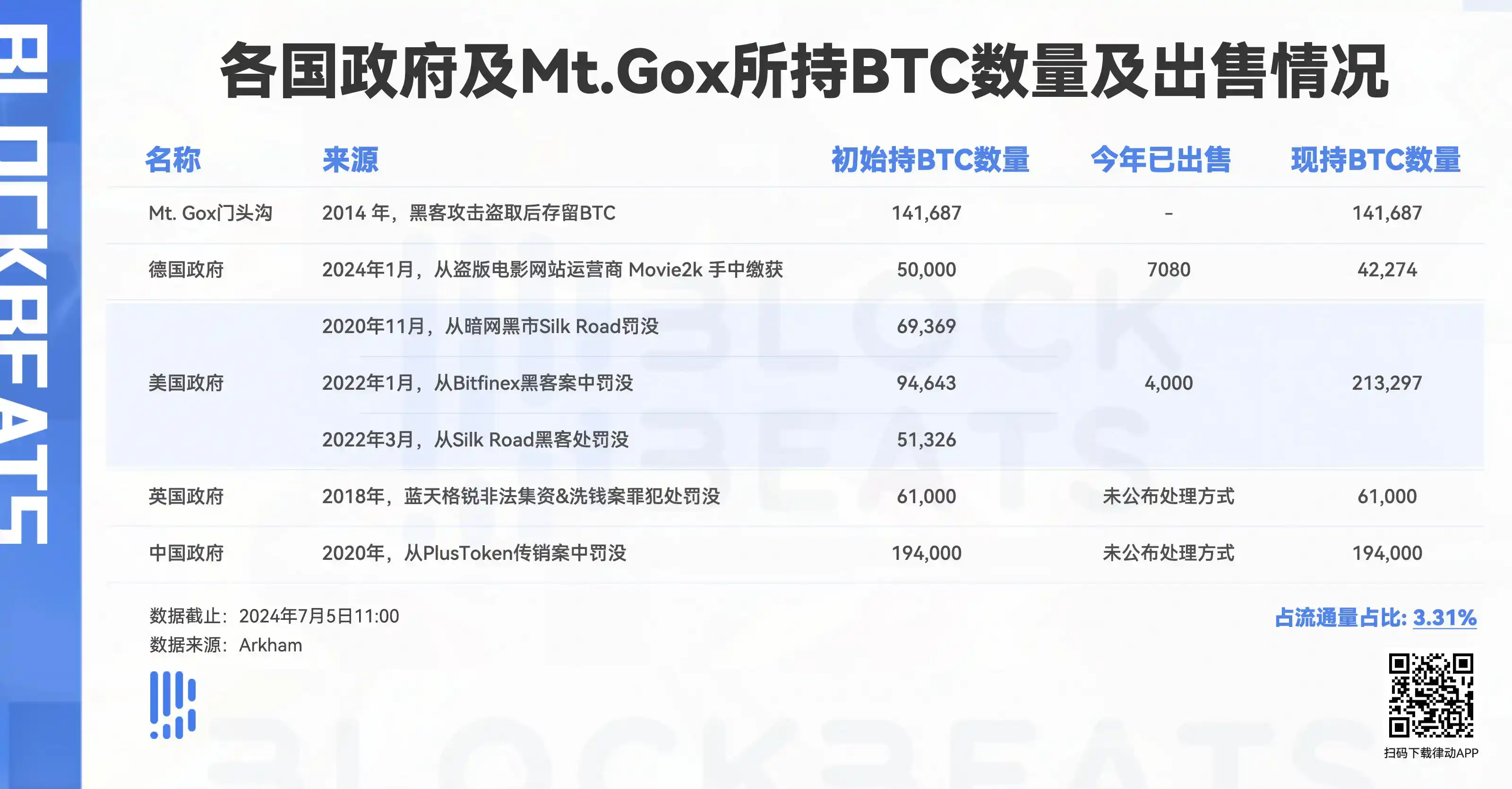
According to Bitcoin Treasuries data, the U.S. government holds 207,189 bitcoins, accounting for 0.987%. Based on the current Bitcoin price, the total value of Bitcoin held by the U.S. government is $19,544,018,200.
You may also like

Morning Report | OpenAI has submitted an S-1 registration statement draft to the U.S. SEC; Morpho completes $175 million financing

Galaxy Deep Research Report: How Hyperliquid's HIP-4 Upgrade Changes the Landscape of Prediction Markets?

Latest research from 13 top universities including Cornell University: The current state, challenges, and misconceptions of the fusion of Crypto and AI

Deconstructing Anthropic: The Best AI Company, Possibly Also a Type of Organizational Invention

Every exchange is a "Universal Exchange."

The counterattack of traditional finance: Alliance chains are quietly reviving
Pantera Capital Partner: How Tokenization is Restructuring the Private Equity and Early Investment Ecosystem?

Mastercard Launches Agent Pay for AI, Plans to Record AI Agent Payment Authorizations on Polygon
Mastercard launched Agent Pay for AI, a new payment protocol designed to help AI agents make small payments such as pay-per-use access to data and APIs. The system plans to record human-granted AI agent permissions on Polygon, focusing on verifiable authorization, identity, and payment controls.

Curve Deploys Llamalend v2 on Optimism With 250,000 OP Incentives
Curve launched Llamalend v2 on Optimism with 250,000 OP incentives from the Optimism Foundation. The upgrade expands Llamalend beyond its earlier crvUSD-focused model, adding broader collateral support, LlamaRisk market reviews, and the ability to use Curve LP tokens as collateral.

Raydium Old Liquidity Pool Reportedly Exploited, With $1.34 Million Moved to Ethereum and Tornado Cash
An old Raydium liquidity pool was reportedly exploited for around $1.34 million in USDC, RAY, and wSOL, with the stolen funds bridged to Ethereum and deposited into Tornado Cash. The incident highlights the tail risks of legacy DeFi pools, old contracts, and cross-chain fund laundering paths.
Kalshi Executive Challenges “SBF Backed AI Unicorns” Narrative, Says Leopold Aschenbrenner Was Key Figure
Kalshi executive John Wang questioned the “SBF backed AI unicorns” narrative, saying Leopold Aschenbrenner was the key figure behind major AI investment decisions.

New York Proposes Stricter Stablecoin Issuer Rules Aligned With Federal GENIUS Act
NYDFS proposed stricter stablecoin issuer rules aligned with the GENIUS Act, covering reserves, custody, redemption timelines, audits, and capital buffers.

CryptoQuant Says Bitcoin Profitable Supply Is Near 45% Pressure Zone as On-Chain Data Points to Market Repricing
CryptoQuant said Bitcoin’s profitable supply is nearing the 45% pressure zone, signaling rising market stress, unrealized losses, and a possible on-chain repricing phase.

Bitcoin Falls Below 200-Week Moving Average as On-Chain Data Shows Over Half of Supply in Loss
Bitcoin dropped below its 200-week moving average as on-chain data showed over 50% of circulating supply is now in loss, signaling rising market stress.

CFTC Reportedly Plans New Prediction Market Rules Focused on Manipulation Risk and Public Interest Review
The CFTC is reportedly preparing new prediction market rules focused on manipulation risk, public interest review, and retail trader protections.

Meet the new WEEX trial fund—your gateway to greater profits

WEEX Labs Lands at Dutch Blockchain Week: A Disruptive Crypto × AI Conversation Sets Sail in Amsterdam
SK Hynix Reportedly Plans U.S. ADR Listing as Early as August, With SEC Approval Possible in Late June
SK Hynix may pursue a U.S. ADR listing as early as August, with SEC approval reportedly possible in late June amid strong AI chip supply chain demand.
Morning Report | OpenAI has submitted an S-1 registration statement draft to the U.S. SEC; Morpho completes $175 million financing
Galaxy Deep Research Report: How Hyperliquid's HIP-4 Upgrade Changes the Landscape of Prediction Markets?
Latest research from 13 top universities including Cornell University: The current state, challenges, and misconceptions of the fusion of Crypto and AI
Deconstructing Anthropic: The Best AI Company, Possibly Also a Type of Organizational Invention
Every exchange is a "Universal Exchange."
The counterattack of traditional finance: Alliance chains are quietly reviving


