
BIO is now live on Binance Launchpool, an article that comprehensively reviews the ecosystem's potential target assets


On December 23, Binance announced that Binance Launchpool will launch its 63rd project, BIO Protocol (BIO), and trading pairs such as BIO/USDT and BIO/BNB will be open starting on January 3, 2025. According to the Binance announcement, BIO Protocol's total initial token supply is 3,320,000,000 tokens, with an initial circulating supply at Binance listing of 1,296,529,168 tokens, accounting for approximately 39.05% of the total token supply. Of this, 56% of BIO tokens will be allocated to the ecosystem and community, 25.4% to early contributors, and 18.6% to early supporters.
Since Binance Labs announced its investment in BIO Protocol, the DeSci market has once again heated up, with related concept tokens such as VITA, GROW, and RSC experiencing significant price increases. Following the news of the Binance Launchpool, recently popular DeFi meme coins also surged rapidly, with RIF rising over 40% in a short period, URO rising over 35% in a short time, and DRUGS surging over 150%. In addition, "established" DeFi projects like VITA and RSC also began to see market activity.
In this article, BlockBeats comprehensively reviews the current BIO ecosystem and potential targets related to the DeFi concept, ranging from DAOs to NFTs and meme coins, showing that the DeFi field is not lacking in speculative opportunities.
BIO Ecosystem DeFi DAO
BIO is a biological DAO network, where each biological DAO focuses on developing research and products in specific scientific fields. Currently, the BIO network consists of eight different scientific communities that focus on longevity, women's health, neurodegenerative diseases, synthetic biology, and other areas. This article will not delve further into the background and mechanism of the BIO Protocol.
Related Reading: "Decoding BIO Protocol: Listed on Binance; Becomes the "On-Chain Scientific Y Combinator" recognized by CZ and Vitalik"
Initial DeFi DAO
The Initial DeFi DAOs were established before BIO Protocol separated from Molecule and currently consist of 7 DAOs. After the establishment of the BIO Protocol, these DAO organizations were first incorporated into the BIO network. During the previous BIO Genesis Event, users also had to exchange tokens from these DAO organizations for BIO tokens, making these DAO tokens part of the assets of the BIO network.
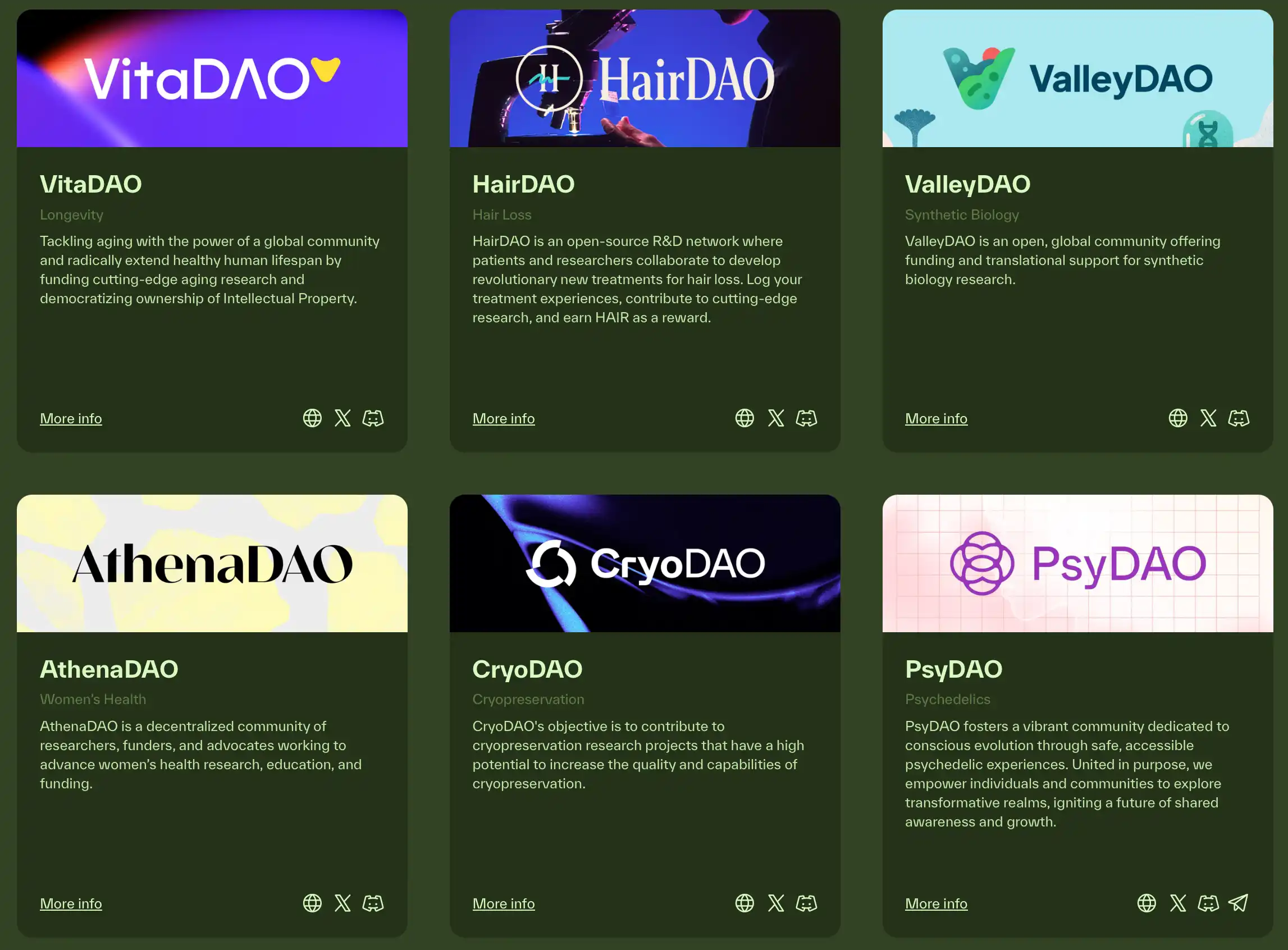
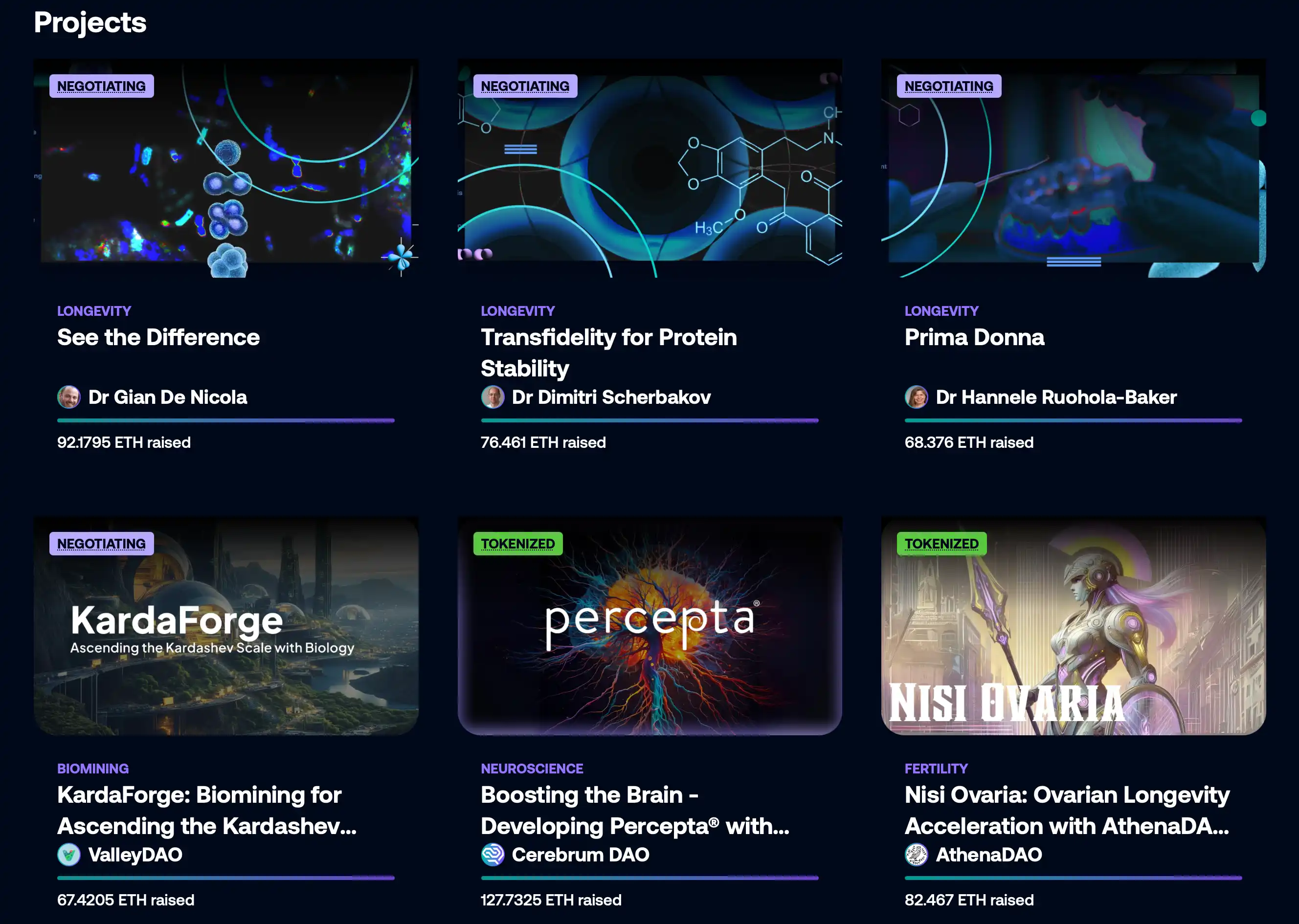
VitaDAO: Secured over $5 million in funding in the field of longevity science, is a decentralized scientific organization supported by Pfizer's venture arm and Balaji Srinivasan, in partnership with Newcastle University. Notably, VitaDAO is the "DAO of DAOs," being the first DeSci DAO of the DeSci progenitor and mother of the BIO Protocol, Molecule, focused on longevity research. The current BIO Protocol Association was also founded by key members of VitaDAO, as a Swiss nonprofit.
HairDAO: Targeting hair loss; the DAO owns patents and consumer product Follicool.
CerebrumDAO: Promoting brain health, raised over $1.5 million, reached an agreement with Fission Pharma to address mitochondrial dysfunction in neurodegenerative diseases.
ValleyDAO: Focused on synthetic biology, raised over $2 million, and partnered with Imperial College London.
AthenaDAO: Advancing women's health research, provided $500,000 for translational research, with 14 pending IP transactions.
CryoDAO: Advancing cryonics, raised over $3 million, partnering with Oxford Cryonics and Advanced Neurobiology.
PsyDAO: Specializing in psychedelic substances, launched a new platform OPSY utilizing psychedelic drug trials and data.
First Batch of Launchpad DAOs
BIO Protocol recently announced the first batch of Launchpad DAOs post-launch, which bid for launch through the BIO platform's Launchpad mechanism. Among these, the first DAO to undergo token bidding was Quantum Biology DAO, with the bidding event concluding on December 17th, witnessing fervent bidding where the starting price surged to over 10 times the original listing.
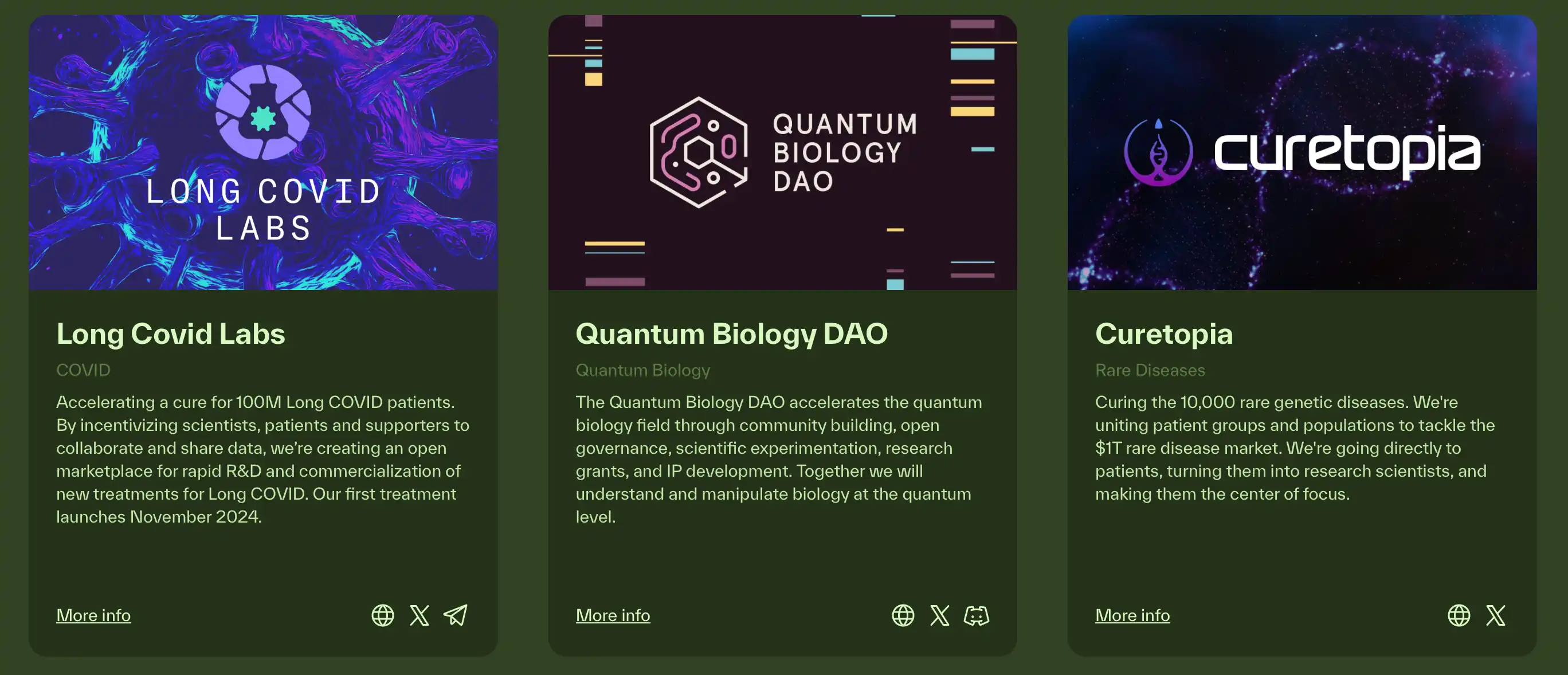
Long COVID Labs: Accelerating the recovery of over 100 million Long COVID patients. Founded by Rohan Dixit, a former Stanford neuroscientist, healthcare entrepreneur, and Long COVID survivor.
Quantum Biology DAO: Creating a quantum microscope to advance biological research. Founded by Clarice D. Aiello (Ph.D. from MIT, a world-leading quantum biologist) and Geoff Anders (Executive Director at Leverage Research).
Curetopia (Rare Diseases): Addressing the rare disease space valued at over $10,000 by uniting families and patient communities. Founded by Ethan Perlstein, a Ph.D. from Harvard University, entrepreneur, and Y-Combinator alumnus.
BIO Meme & AI DAO
In addition to serious research DAO organizations, the BIO team and community have also conducted intriguing DeSci experiments outside of DeSci DAO and successfully attracted significant attention to the DeSci field.
RIF/URO
Pump.Science is a meme issuance platform launched by BIO Protocol at this year's Token 2049 Solana Breakpoint conference, where players can purchase meme tokens representing drugs, participate in predicting the effects of drugs, and trading experimental data. The post-DEVCON Bangkok surge of RIF/URO also served as a direct catalyst for the DeSci field, long considered a pump-and-dump leader in the market.
Related Readings:
《DeSci Leader Also Stirring Up Trouble, Can Pump.science Handle "Biological Science Meme" Well?》
《Biological Experiment Memes Grow One Thousandfold in a Week, Hot Money Flocking into DeSci》

DRUGS
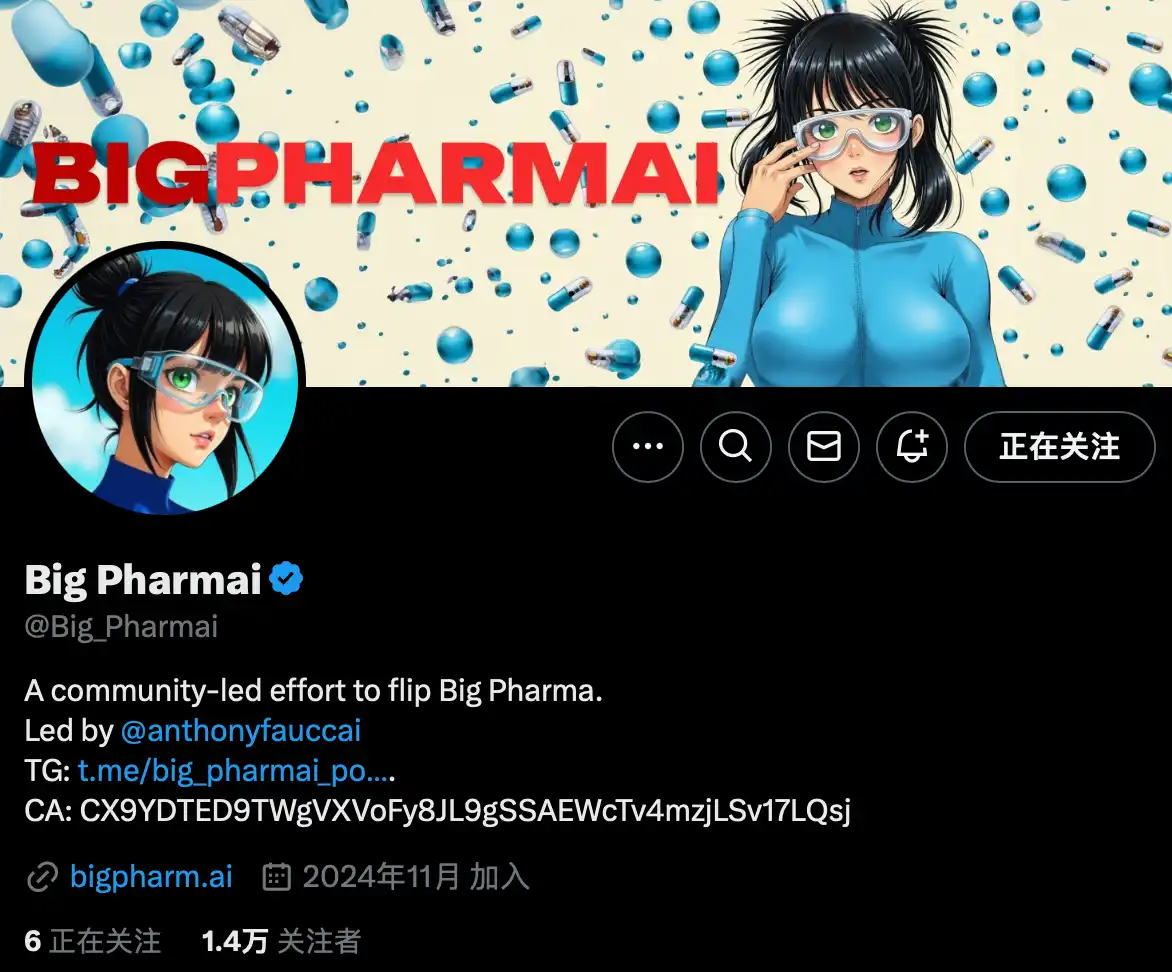
DRUGS (Big Pharma) also known as "Little BIO," is the "brainchild" of the BIO Protocol ecosystem. DRUGS aims to disrupt the monopoly business model of traditional large medical drug companies. Since its inception, the project has received widespread support from the BIO ecosystem, including Pump Science, other BIO-related DeSci DAOs, and BIO co-founder Paul himself.
Related Read: "DRUGS' 500x Wealth Creation Myth, Triggering daos.fun New Listing Craze"
GIRLE/BABY
GIRLE and BABY are AI DAO and meme tokens issued by AthenaDAO in the BIO ecosystem on the Solana DAOs.fun platform and the Base chain, respectively, both supporting scientific research in the field of female reproduction.

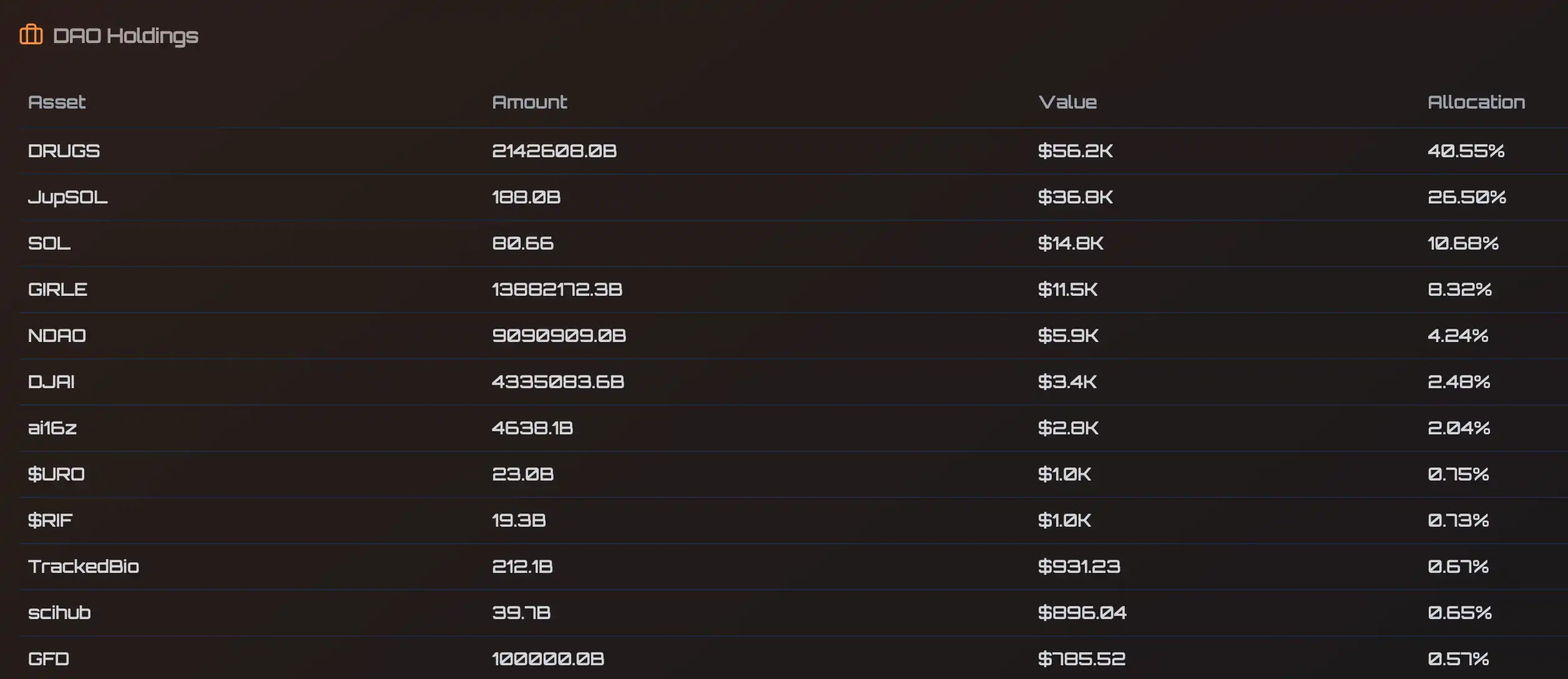
Specifically, GIRLE aims to empower the future of reproduction through tokens using AI and Web3. The team is currently conducting experiments related to peptide cell repair, testing the impact of peptides on cells, and is about to launch related experimental tokens. The DAO treasury's other token holdings can also be seen on its official website.
BIO Ecosystem IPT
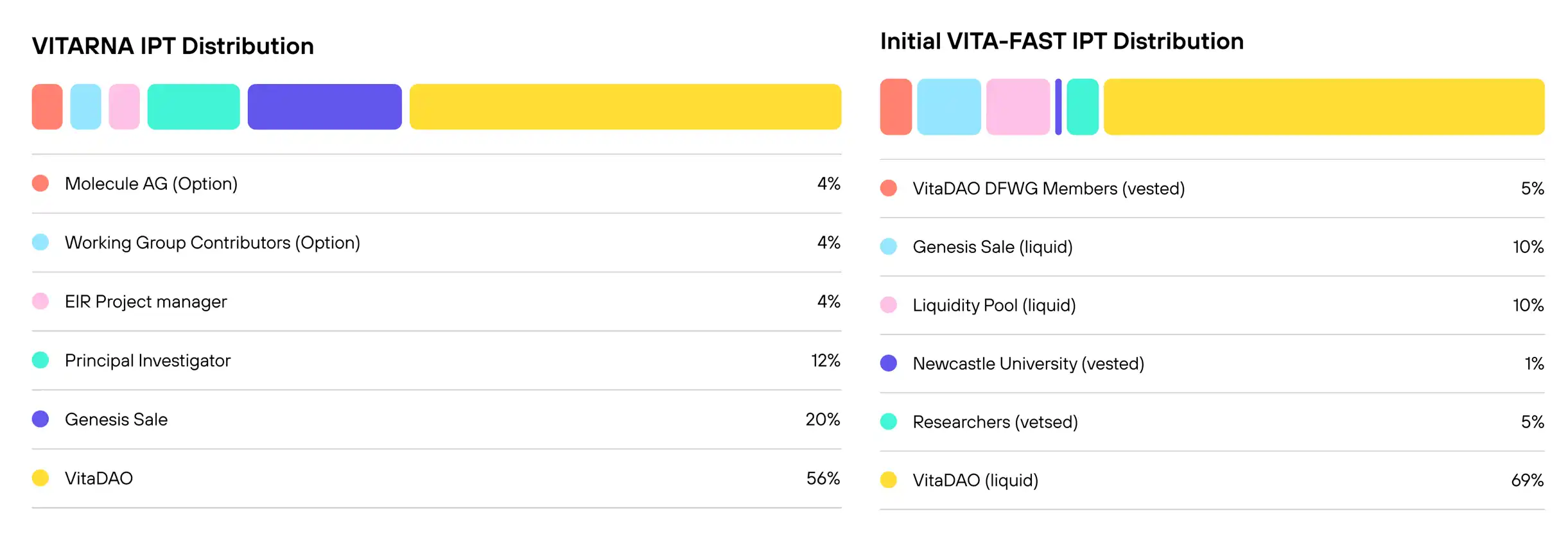
IPT is a knowledge token pioneered by the Molecule Catalyst platform, representing partial governance rights over generated research IP. These tokens give holders the opportunity to directly participate in research development, decision-making, and future directions. Each BioDAO typically holds an IP token combination representing intellectual property related to a specific scientific research area of the BioDAO. Currently, the most recognized IPTs are VitaRNA and VITA-FAST owned and developed by VitaDAO.
IPT VitaRNA & VITA-FAST
VitaRNA is Artan Bio's IPT, which is a gene therapy project that raised over $300,000. Artan Bio is exploring the promising field of gene therapy aimed at addressing genetic factors associated with aging. The company's approach is to develop therapeutic candidates that could potentially suppress mutations that lead to aging. Artan Bio is led by two entrepreneurs who have previously advanced a drug development platform into human clinical trials.
VITA-FAST, on the other hand, is IPT from Viktor Korolchuk's lab, also successfully raising over $300,000. VITA-FAST focuses on the research of drugs that enhance autophagy, a natural "garbage disposal" present in our body's cells that can eliminate unnecessary protein buildup.
OVARIA
OVARIA is an IPT launched by AthenaDAO in collaboration with Gero. Gero is a biotech company utilizing artificial intelligence for target and drug discovery. AthenaDAO partners with Gero to fundamentally alter the treatment landscape of ovarian aging, offering therapeutic potential in a currently limited field. AthenaDAO will use their platform to identify up to 10 new targets for ovarian aging, with the results of these studies expected to delay menopause and reduce its health-related consequences.

Competitors & Related Memes
In addition to the BIO series-related targets, the ecosystem's heat has also expanded to other areas of DeSci.
RSC
The Research Hub is a DeSci project founded by Coinbase CEO Brian Armstrong, with a mission to accelerate the pace of scientific research. By creating modern mobile and web applications, people can engage in scientific research more efficiently.
Within the ResearchHub platform, research papers are stored and grouped by research area in "centers." Personal centers essentially serve as on-site journals within key areas, with posts that have high voting rates (i.e., papers and their relevant abstracts and discussions) moved to the top of each center.

Scihub
Scihub is inspired by the world's largest free paper download center, Sci-Hub, which faces legal issues due to its open nature and relies solely on donations to operate. 0xAA (@0xAA_Science) is the top holder of the token, currently owning 22% of the total supply. They have stated that they will donate 20% of the tokens to SciHub's operators as a show of support for their cause and platform development.

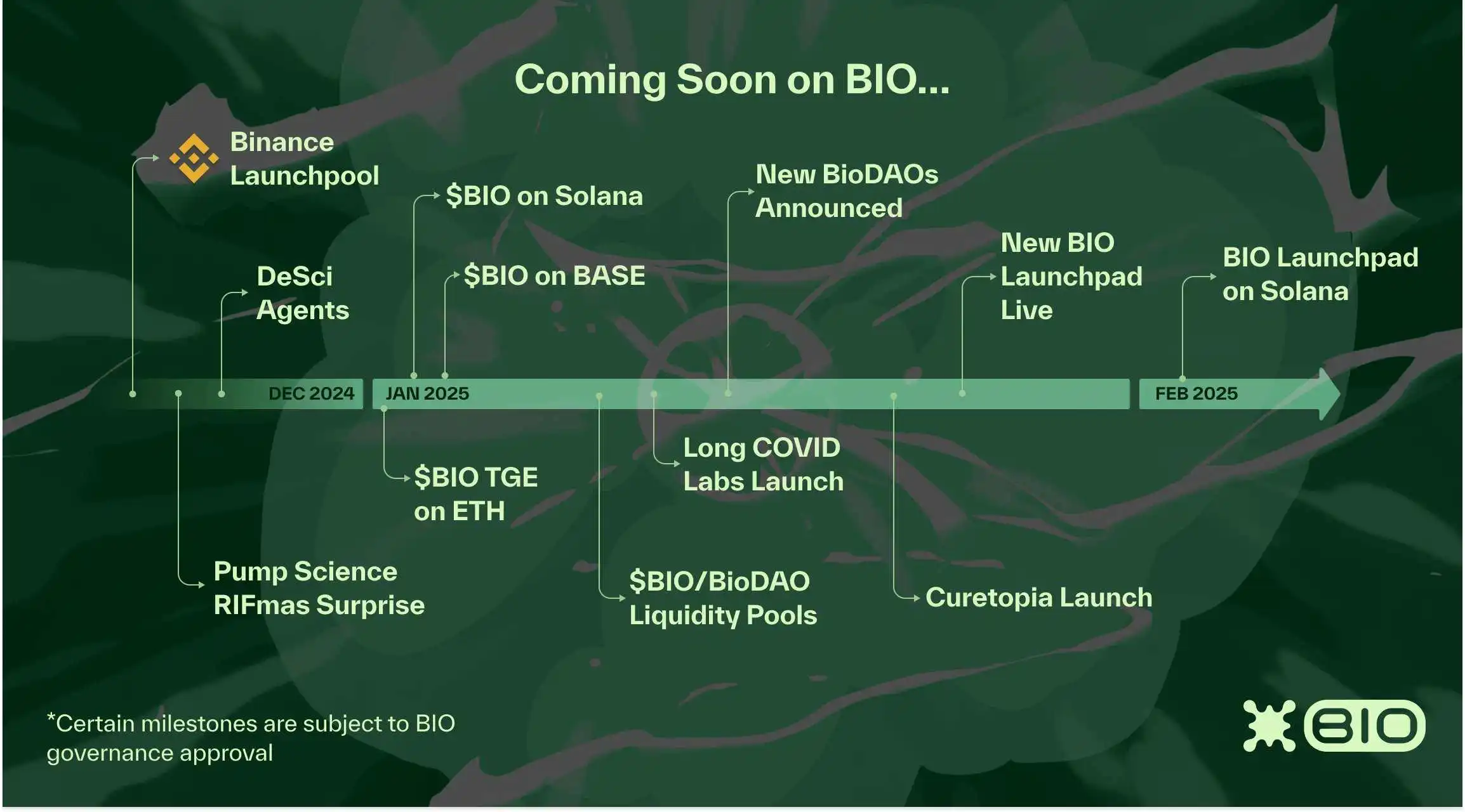
Currently, BIO Protocol has released its 2025 roadmap, which includes:
The BIO token will undergo a TGE on the Ethereum mainnet on January 3rd;
The BIO token will be listed on the Solana and Base networks;
The new BioDAO will be launched;
The BIO/BioDAO liquidity pool will be created;
The new BIO Launchpad will be officially launched.
With the BIO token being listed on Binance, the DeSci field may be on the brink of another wave of excitement.
You may also like

Morning Report | BitMine increased its holdings by 126,971 ETH last week; trader Eugene announced his exit from the crypto market

Wang Chuan: How can one not feel anxious after the neighbor Old Wang made thirty times profit by investing in storage stocks? (Seven) - A quarter-century cycle

Cryptocurrency CEXs are flocking to sell US stocks, and traditional brokerages are facing an "uninvited guest."

$75 billion in foreign capital has fled, and South Korean retail investors have absorbed it all using leverage

Japan’s Three Megabanks Plan Joint Stablecoin Issuance in Fiscal 2026
MUFG, SMBC, and Mizuho reportedly plan to jointly issue fiat-pegged stablecoins in fiscal 2026, signaling Japan’s growing push into bank-led digital payment infrastructure.

Humanity Discloses H Token Dual-Chain Attack Details, With Losses on Ethereum and BSC Exceeding $36 Million
Humanity said the H token attack across Ethereum and BSC caused more than $36 million in losses after leaked ProxyAdmin keys enabled malicious contract upgrades and token minting.
White House Discusses CLARITY Act With Law Enforcement Ahead of Senate Vote
The White House discussed the CLARITY Act with law enforcement ahead of a Senate vote, focusing on illicit finance risks and developer protections.

Bitcoin Trading Guide 2026: Strategies for Experienced Traders

What Is XAUT and PAXG? Why Tokenized Gold Is Booming in 2026

Will the SpaceX IPO Hurt Bitcoin? Here's What Traders Are Watching

Foreign selling in the South Korean stock market accelerates, with cumulative net sales reportedly reaching $75 billion this year
On June 9, The Kobeissi Letter, citing Goldman Sachs data, reported that global investors are selling South Korean stocks at an unusually rapid pace. In the latest trading session, foreign investors sold about $801 million worth of Kospi constituent stocks again; total foreign outflows last week reached about $10 billion, and the market has been in net foreign selling on nearly every trading day over the past month. According to the data cited in the report, foreign investors have sold about $75 billion worth of South Korean stocks so far this year. Meanwhile, South Korean retail and institutional investors together recorded roughly $69 billion in net buying over the same period, suggesting that the market’s main buying support has come from domestic capital rather than returning overseas funds. The information currently disclosed still mainly comes from The Kobeissi Letter’s retelling and Goldman Sachs data summaries, while public details on the statistical period and the specific definition of “selling” remain relatively limited.

Fortune Warns of Strategy’s Financing Structure Risks as Bitcoin Premium Narrows
Fortune warned that Strategy’s Bitcoin treasury model faces growing financing risks as MSTR’s net asset premium narrows and preferred stock dividend pressure increases.

Ferrari Challenge Le Mans: Carl Moon to Dominate in WEEX Livery

Sahara AI Responds to SAHARA’s Sharp Drop: No Contract or Product Security Issues Found, Internal Investigation Underway
Sahara AI responded to SAHARA’s 60% price drop, saying no token contract or product security issues have been found and an internal investigation is underway.

WEEX Deposit/Withdrawal Dynamic Island: Your Asset Status, Always in Sight
Scaling Crypto Derivatives: The Digital Asset Infrastructure Behind High-Volume Trading
In the fast-moving digital asset ecosystem, derivatives platforms face an extreme architectural test. High-leverage futures markets demand more than just standard security—they require absolute operational precision, zero-latency matching engines, and ironclad structural scalability, all while navigating intense market volatility.
As global platforms scale to meet these demands, the industry is shifting away from rigid, monolithic setups toward a more agile, "decoupled" infrastructure philosophy.
The Blueprint for High-Volume Copy TradingFor elite global exchanges like WEEX (founded in 2018), this architectural choice becomes critical when scaling high-volume retail features like social copy trading. When thousands of users automatically mirror the real-time strategies of elite traders simultaneously, it triggers sudden, monumental spikes in concurrent transactional volume.
To prevent execution latency or settlement bottlenecks during these peak volatility events, a platform's primary engine must remain entirely dedicated to risk management, copy-trade synchronization, and order matching.
The Architectural Rule: New-generation platforms must separate front-end user execution engines from heavy backend infrastructural overhead to eliminate operational friction.
By separating these layers, platforms can maintain complete sovereignty over their trading environments and user experiences while strategically aligning with institutional-grade infrastructure ecosystems. This strategic framework allows modern exchanges to leverage advanced Digital Asset Custody infrastructure such as Cobo’s behind the scenes, ensuring that backend wallet management scales elastically alongside trading spikes.
Capitalizing on Market Momentum and 400× LeverageIn a derivatives arena where platforms offer up to 400× leverage on perpetual contracts, capital efficiency and market agility are core business metrics. To capture market momentum, an exchange needs the ability to rapidly expand its asset offerings, supporting everything from legacy crypto assets to sudden, trending altcoins across a massive library of trading pairs.
Adopting a flexible, scalable Wallet-as-a-Service (WaaS) solution such as Cobo’s could completely rewrite the development timeline for high-growth exchanges. Instead of spending months of engineering capital building out custom backend wallet architectures for every new blockchain network, platforms can deploy localized infrastructure in days.
This agility allows platforms to instantly scale their listings to over a thousand trading pairs without compromising security or delaying time-to-market. It mirrors the exact operational advantages seen during high-velocity market events, similar to how advanced wallet infrastructure empowers platforms during sudden asset surges; allowing exchanges to pass that speed and liquidity directly to their global user base.
A Mature Foundation for GrowthThe synergy between trusted infrastructure ecosystems and global trading platforms represents the natural evolution of a maturing crypto market. As WEEX continues to scale its global spot and derivatives offerings for over 6 million users, adopting robust backend paradigms proves that platforms no longer have to compromise between cutting-edge trading velocity and uncompromised structural security.

Get Paid to Onboard? Try WEEX’s New Homepage with Rewards for Registration, Deposit & Trade
WEEX Custom Layout: Build Your Perfect Trading Workspace in Seconds
Morning Report | BitMine increased its holdings by 126,971 ETH last week; trader Eugene announced his exit from the crypto market
Wang Chuan: How can one not feel anxious after the neighbor Old Wang made thirty times profit by investing in storage stocks? (Seven) - A quarter-century cycle
Cryptocurrency CEXs are flocking to sell US stocks, and traditional brokerages are facing an "uninvited guest."
$75 billion in foreign capital has fled, and South Korean retail investors have absorbed it all using leverage
Japan’s Three Megabanks Plan Joint Stablecoin Issuance in Fiscal 2026
MUFG, SMBC, and Mizuho reportedly plan to jointly issue fiat-pegged stablecoins in fiscal 2026, signaling Japan’s growing push into bank-led digital payment infrastructure.
Humanity Discloses H Token Dual-Chain Attack Details, With Losses on Ethereum and BSC Exceeding $36 Million
Humanity said the H token attack across Ethereum and BSC caused more than $36 million in losses after leaked ProxyAdmin keys enabled malicious contract upgrades and token minting.


